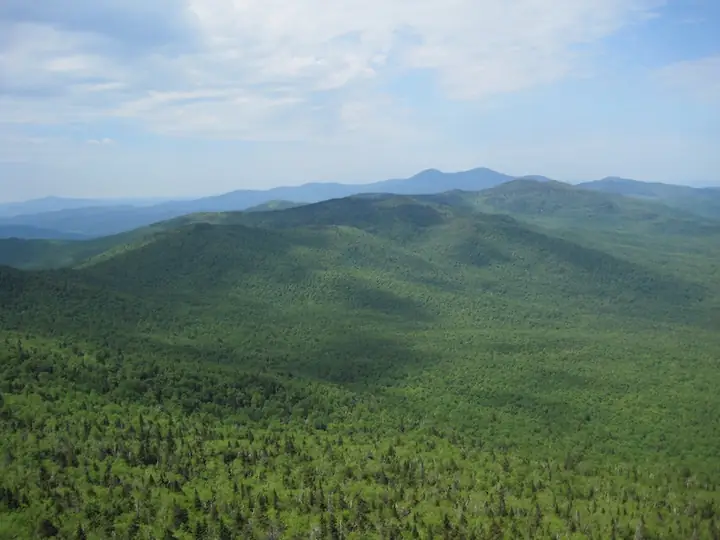
The Bosque Estatal de Guajataca is a hiking forest in the hills of Isabela, in Puerto Rico's northwestern karst country. The land here is limestone that rain has dissolved into a maze of steep, forested haystack hills called mogotes, with sinkholes, caves and hidden valleys between them. The forest has one of the largest trail networks of any state forest on the island, an observation tower over the karst, and a cave you can explore with a flashlight. It is far less visited than El Yunque and a good choice for travelers based on the northwest coast who want a morning in the woods.
About the forest
The land was transferred to the people of Puerto Rico in 1943 by the Puerto Rico Reconstruction Administration to protect the karst region's plants and animals. Today the Department of Natural and Environmental Resources (DRNA) manages it as one of the state's public forests. It covers about 2,357 cuerdas (roughly 2,300 acres) between about 500 and 1,100 feet above sea level, in the municipalities of Isabela and Quebradillas, close to Camuy and San Sebastián.
The forest is classed as subtropical moist forest. According to the DRNA, about three quarters of it is drier forest on the porous limestone slopes of the mogotes, and the remaining quarter is damper forest in the sheltered valleys and sinkholes between them. More than 180 tree species have been recorded, around 40 of them endemic to Puerto Rico. There are also old plantations of trees such as mahogany, teak and ausubo.
Wildlife
Guajataca is a stronghold of the Puerto Rican boa, an endangered and protected species. The most common mammal is the Jamaican fruit bat, and several bat colonies use the caves. More than 70 bird species have been recorded, 12 of them endemic, including the Puerto Rican woodpecker, the Puerto Rican tody, the screech-owl, the Puerto Rican vireo, the Adelaide's warbler and the Puerto Rican bullfinch. BirdLife International recognizes the northern karst belt, including this forest, as an Important Bird Area.
The trails
The DRNA lists about 44 kilometers (27 miles) of trails, described in its fact sheet as the best trail system of all the state forests. Most visitors walk the Interpretive Trail (Vereda Interpretativa), the forest's most popular route, which leads to an observation tower with views across the green, lumpy karst landscape. Beyond the tower, the network continues deep into the forest.
Trail conditions vary with storms and with how recently each route has been cleared. Ask at the forest office which trails are open and cleared before you set out, and do not venture onto unmarked paths: karst terrain is full of hidden holes and steep drops, and it is easy to get disoriented.
Cueva del Viento
The forest's best-known feature is the Cueva del Viento, the Cave of the Wind. It is reached by Trail #1, which branches off the Interpretive Trail, and you enter down a wooden staircase of about 40 steps. Inside is a largely level karst cave with stalactites and stalagmites. The area near the entrance has been damaged by souvenir hunters who broke off formations, but the interior is in better shape.
The cave has no lighting, so bring a strong flashlight or headlamp for each person, plus spare batteries. The floor is muddy and slippery, and a helmet is a good idea. Bats roost inside, so keep your voice down, do not shine lights directly at them and never touch the walls or formations. A round trip to the cave, including time underground, can take around three hours.
Status check: the cave was reported closed for repairs in 2020, and current official information on its status is hard to find. Ask the forest office about access before you plan your day around it.
Hours, facilities and camping
In 2025, Primera Hora reported the forest open Tuesday to Sunday and on holidays, from 8:00 a.m. to 4:00 p.m. There is no admission fee for hiking. Confirm with the DRNA (787-999-2200) before going, since hours can change. Facilities include an information center and ranger office, restrooms, gazebos, grills and a parking area, all limited in size, so groups should coordinate their visit in advance with the DRNA. Camping is allowed in a designated area but requires a DRNA permit arranged ahead of time.
Getting there
The forest is reached by PR-446 in Isabela. Check in at the ranger station on PR-446 before and after hiking. From San Juan, the drive takes about two hours; from Rincón, roughly one hour. A car is essential.
Rules and safety
- Cover up. Wear closed shoes, long pants, long sleeves and a cap. Plants such as stinging nettle and carrasco can cause skin irritation that lasts for days.
- Do not grab vegetation along the trail; it can hide wasp nests.
- Do not eat wild mushrooms. Highly toxic species grow here.
- Prohibited: campfires, hammocks, hunting, pets, cutting plants, touching or disturbing animals, loud noise and littering.
- Bring water, insect repellent and a charged phone. Rain makes the limestone very slippery.
Combine it with
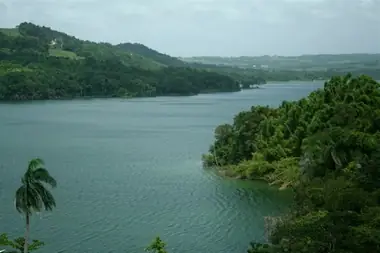
Many visitors confuse the forest with nearby Lake Guajataca, a reservoir a short drive away that is good for fishing and kayaking; the two make an easy pairing. Afterward, cool off at Playa Jobos in Isabela, or head east through the karst to the Río Tanamá or the Río Camuy Cave Park area. Browse the Isabela directory for places to eat and stay.