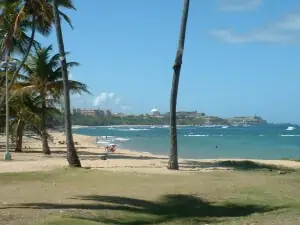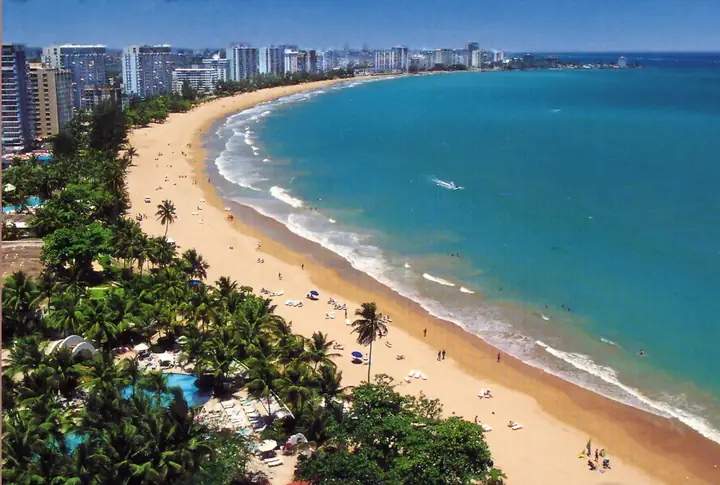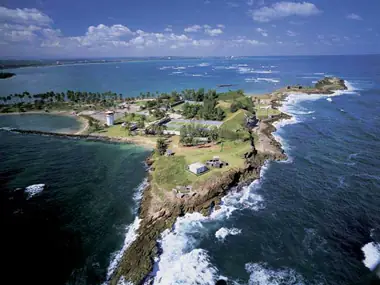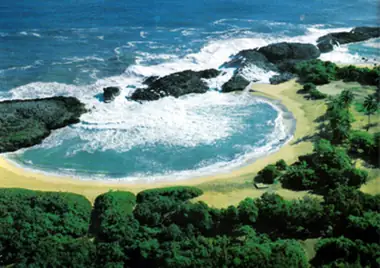
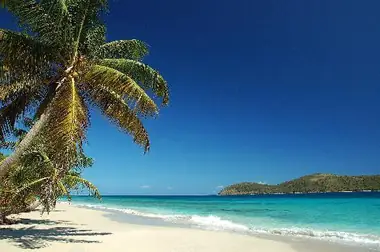
Zoni Beach (Playa Zoní) is a long, quiet stretch of sand at the far eastern end of Culebra, where the island's main road simply runs out. There are no vendors, no chair rentals and usually not many people, and the view across the water takes in the island of Culebrita, Cayo Norte and, on clear days, St. Thomas in the U.S. Virgin Islands. If Flamenco Beach is Culebra's postcard, Zoni is where you go to have a beach mostly to yourself.
Why go
Zoni appeals for what it does not have. With no facilities and a location at the end of the road, it stays calm even when Flamenco is busy. It suits long walks along the shore, reading in the shade and watching boats run between Culebra and Culebrita. On calm days, with low tide and clear water, there is snorkeling close to shore. It is also a sea turtle nesting beach, which gives a visit here a special responsibility.
Sea turtles
Three species of sea turtle nest on Culebra's beaches: the leatherback, the green turtle and the hawksbill. Zoni is known as a nesting beach for leatherbacks, the largest sea turtles in the world. The nesting season runs through spring and into summer, and nests may be marked off on the sand. If you visit during those months:
- Stay clear of any marked or fenced nest areas, and do not dig in the upper beach.
- Do not use lights or flash on the beach at night, which can disorient nesting females and hatchlings.
- If you see a turtle on the beach, keep your distance, stay quiet and let it go about its business.
- Take all trash with you; plastic and fishing line are a serious hazard for turtles.
Some nesting beaches on Culebra, such as nearby Playa Brava, may be closed to visitors during the peak nesting months. Respect any posted closures.
Swimming and snorkeling
Conditions at Zoni vary with the season and the wind. The beach is exposed to the open sea, and conditions can be rough, especially in winter, when swimming can be unsafe. There are no lifeguards. Look at the water before you go in, stay close to shore and skip swimming on days with breaking waves.
When the sea is calm, snorkeling at low tide can be rewarding, with clear water over rocks and reef near the shore. Watch out for sea urchins: wear water shoes, and look where you put your hands and feet. Avoid standing on coral, which is easily damaged.
Getting there
First you need to get to Culebra. Ferries run from Ceiba on the main island, and small planes fly from San Juan and Ceiba; see our Culebra guide and our ferry guide for the details.
On Culebra, Zoni is at the eastern end of PR-250, the island's longest road. It runs about 9 km (5.6 miles) from the ferry pier near the town of Dewey, past the airport and along the north side of Ensenada Honda bay, and ends at Zoni in the Fraile neighborhood. Simply follow PR-250 until it stops. On the way, the road crosses green hills with views over Culebrita and Cayo Norte; it is worth pulling over safely for a photo.
Most visitors drive a rented golf cart or jeep, which lets you combine Zoni with other beaches. Public cars and taxis also operate on the island; if you take one, arrange your return pickup before the driver leaves, because there is nowhere to find a ride at the end of the road. Parking is limited and fills up on weekends and holidays, so park only where it is clearly allowed and do not block the road.
The beach is free, and visitors generally come between sunrise and sunset.
What to bring
There are no facilities at Zoni: no restrooms, showers, food or drink. On Culebra, Flamenco is the only beach with amenities. Plan to be self-sufficient.
- Plenty of water and snacks, or a packed lunch.
- Sunscreen, a hat and an umbrella in case the shady spots are taken.
- Water shoes, snorkel gear and a towel.
- A bag to carry out all your trash.
A note on Culebra's past
The U.S. Navy used Culebra for gunnery and bombing practice for decades, until protests by residents helped end that use in 1975. Cleanup of old munitions has been slow, and the U.S. Army Corps of Engineers has warned about unexploded ordnance that may remain on the island. If you ever see an unusual metal object in the sand or the water, do not touch it; note the location and report it to local authorities.
Much of the archipelago's wild land is now protected. A bird sanctuary was created on Culebra in 1909 by President Theodore Roosevelt, and today the Culebra National Wildlife Refuge, managed by the U.S. Fish and Wildlife Service, protects several areas and offshore islands, including Culebrita.
Combine it with
Zoni pairs naturally with a boat trip to Culebrita, the island right in front of it, with its lighthouse ruins and Playa Tortuga. Other quiet beaches reached from PR-250 include Playa Brava, a wilder beach with the island's biggest surf, reached by a hike, and Playa Resaca, a turtle nesting beach reached by a fairly hard hike through mangroves and boulders. Back toward town, Flamenco has food stands, facilities and the old Navy tanks on the sand.
Good to know
- Where: eastern end of PR-250, Culebra, about 9 km from the ferry pier.
- No facilities and no lifeguards; bring water, food and shade.
- Sea can be rough, especially in winter. Swim only on calm days.
- Sea turtle nesting beach: keep away from nests and avoid lights at night.
- Views of Culebrita, Cayo Norte and St. Thomas.