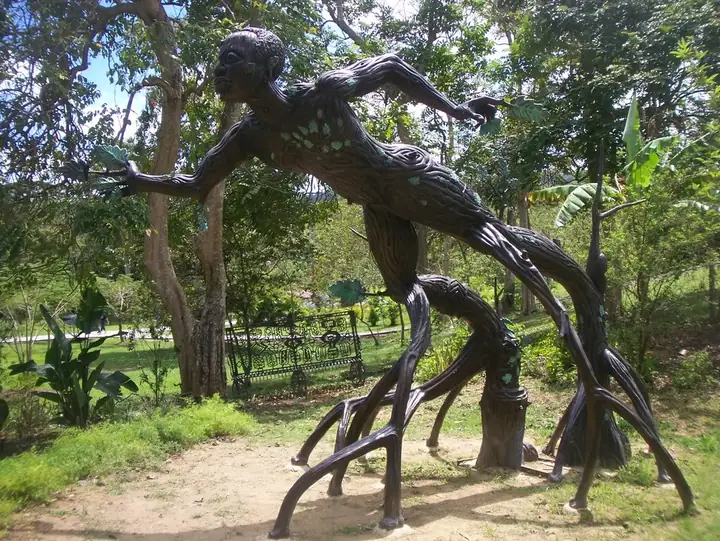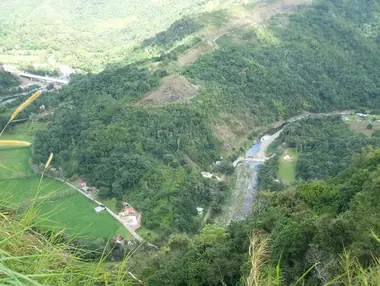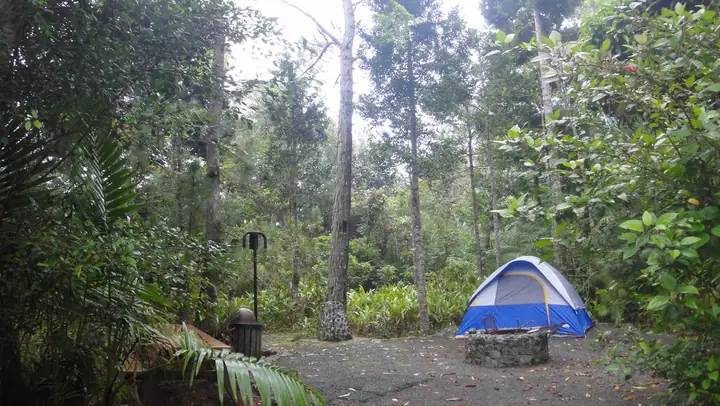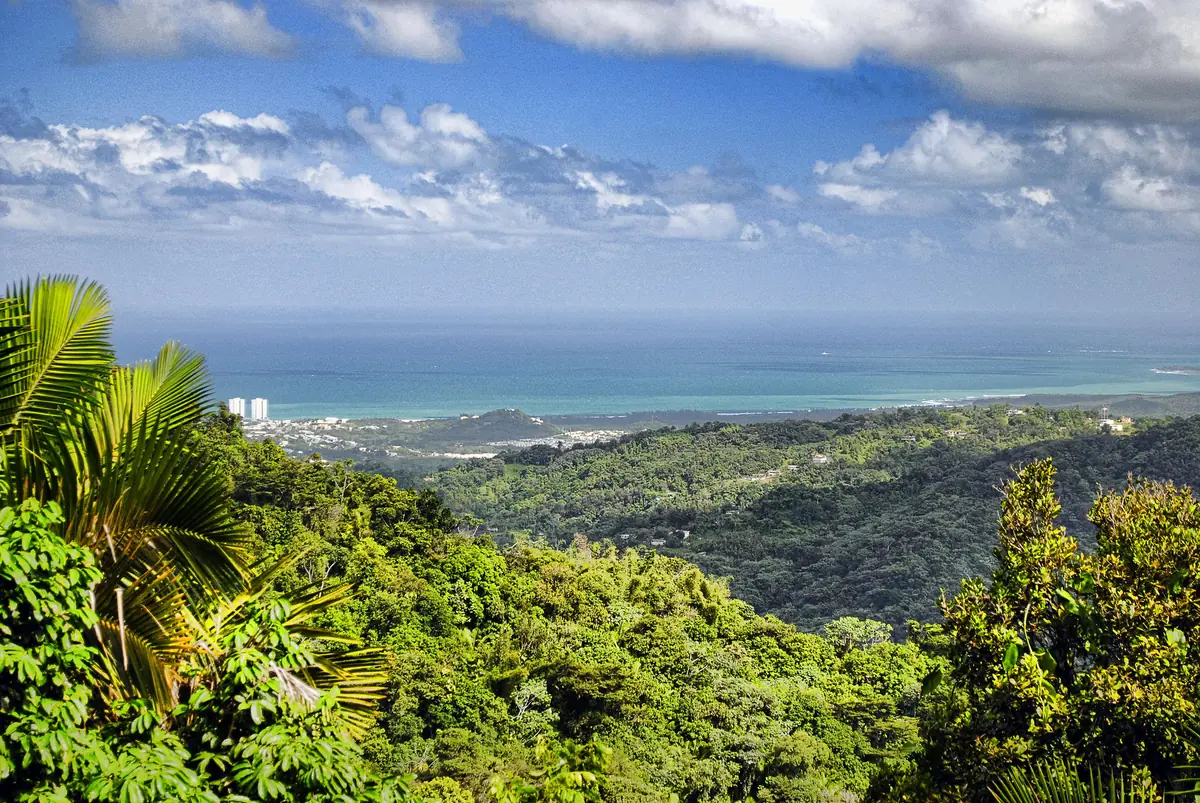
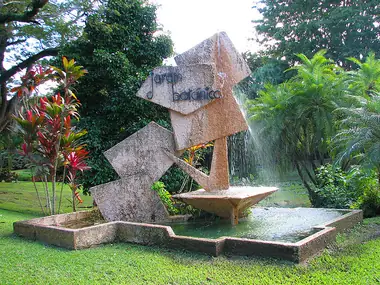
In the middle of the San Juan metro area, just off the busy PR-1 highway in Río Piedras, the University of Puerto Rico keeps a large green space: the Jardín Botánico de la Universidad de Puerto Rico. Its roughly 289 cuerdas (the Puerto Rican land unit, close to an acre) hold more than 30,000 plants, along with ponds, waterfalls, sculptures and shaded trails. It is a working research garden, with a herbarium and the university's agricultural experiment station on site, but it is also where city residents come to walk and where many couples hold their weddings. For visitors, it is an easy, inexpensive way to spend a calm morning among tropical plants without leaving the city.
What it is
The garden describes itself as a living laboratory of tropical plants, a center for education and scientific research, and a recreation area. Its collections include native and endangered species. Behind the scenes, its herbarium holds more than 36,000 dried plant specimens, and a library run by the U.S. Forest Service is open to researchers by appointment. The Estación Experimental Agrícola also has its San Juan station here.
PR-1 divides the property into a North and a South section. Most of what visitors come to see is in the South section, where parking is also located.
Gardens to see
The South section is laid out as a series of themed gardens connected by paths:
- Jardín Monet, named for the French painter.
- The Palmetum, the palm collection.
- Capilla de los Bambúes, the "bamboo chapel," a bamboo grove that is often booked for weddings.
- Jardín Oriental, two Asian-style gardens with a torii gate and Chinese guardian dog statues.
- Heliconias y Jengibres, a garden of heliconias and gingers.
- The ornamental fountains, with a bromeliad garden.
- Two sculpture gardens, a pollinator garden, an urban vegetable garden and a pavilion of medicinal and poisonous plants.
- Los Guanacastes, an area named for its guanacaste trees, used for groups and events.
Several trails wind through the property, including Paseo de los Robles, Vereda Colibrí (Hummingbird Trail), Vereda La Arboleda, Vereda del Café, Vereda San Pedrito and Vereda Bucayos.
The North section is more institutional, with the herbarium, plant nurseries, a tree nursery run by Para la Naturaleza, the university press (Editorial UPR) and administrative offices. It also has an entomology museum and a Taíno garden.
Hours, tours and rules
As of 2026, the garden's official page lists it as open daily from 6 a.m. to 6 p.m. Administrative offices work Monday to Friday, 7:30 a.m. to 4 p.m. The page does not list a general admission charge, so check for any entry or parking fee when you arrive.
Guided options require a reservation and are aimed at groups:
- Walking tour: groups of 10 to 30, $1 per person, at 9 a.m., 10:30 a.m. and 1 p.m.
- Mini trolley tour: groups of 5 to 12, $5 per person, at 9 a.m., 10 a.m. and 1 p.m.
To book, call the university switchboard at (787) 250-0000, extension 6579, or email [email protected]. Professional photo sessions, including wedding, quinceañera and graduation shoots, need a permit and pay a fee, and cooking and barbecues are not allowed in the event areas. The garden shop, Verde que te Quiero Verde, is in the South section with the information center.
Getting there and parking
The garden lies next to PR-1 between Río Piedras and Caguas. The visitor entrance is through Calle Guaracanal into the South section. Park only where security staff indicate. A car, taxi or rideshare is the practical way to arrive.
Practical tips
- Go early. The garden opens at 6 a.m., and the first hours are the coolest and quietest.
- Bring insect repellent, water, comfortable shoes and an umbrella or rain jacket. Afternoon showers are common.
- Events: gazebos, the Palmetum and other areas are rented for weddings and parties, so some spots may be reserved when you visit.
- Stop by the information center to get your bearings before setting out.
Nearby: the UPR Río Piedras campus
A short drive north, the University of Puerto Rico's main campus in Río Piedras is worth adding to the same day. The university was founded on March 12, 1903, and the Río Piedras campus sits at the northern end of the old downtown of Río Piedras, today a district of San Juan.
- La Torre. The campus symbol is its clock tower, officially the Franklin Delano Roosevelt Tower, built in 1937 and designed by Rafael Carmoega, the architect of the Capitol. The tower and the central quadrangle around it are on the U.S. National Register of Historic Places.
- Museo de Historia, Antropología y Arte. Created by law in 1951, it was the first museum in Puerto Rico established by legislation. Its building, designed by Henry Klumb, opened in 1959. The collections cover pre-Columbian archaeology, Puerto Rican and international painting and prints, posters, folk art, historical documents and more. Admission is free. Its website lists daytime hours Monday to Saturday, with a late opening on Tuesdays and closures on holidays and university recesses, so check before you go.
- Getting around. The Tren Urbano's Universidad station is on campus. Drivers can use the Plaza Universitaria garage, which charges by the hour.
For coffee or brunch nearby, Panismo is a worker-run community bakery in the neighborhood.
Combine it with
Garden lovers can continue south on PR-1 toward Caguas, home to the Caguas botanical garden. For more on the island's birds, see the guide to bird watching in Puerto Rico.
Good to know
- University of Puerto Rico Botanical Garden, next to PR-1 in Río Piedras; entrance via Calle Guaracanal.
- Open daily 6 a.m. to 6 p.m. (as of 2026).
- Group walking and trolley tours by reservation.
- Pair it with the UPR campus tower and its free museum.