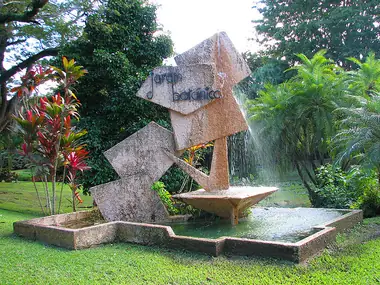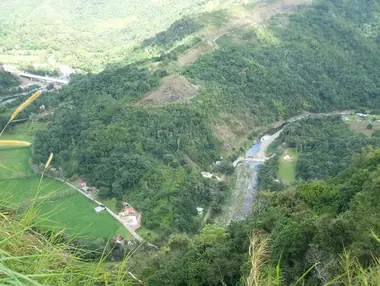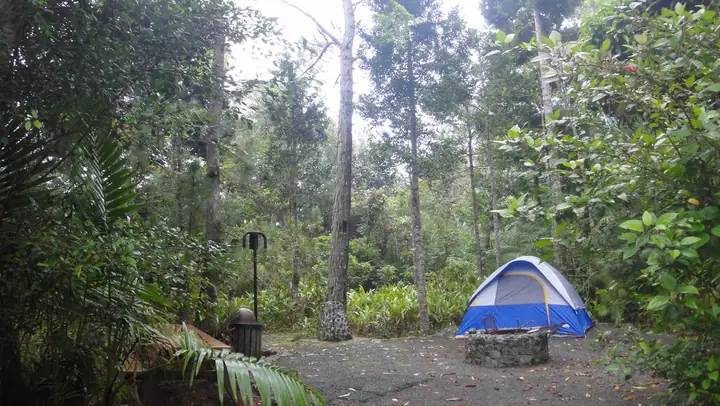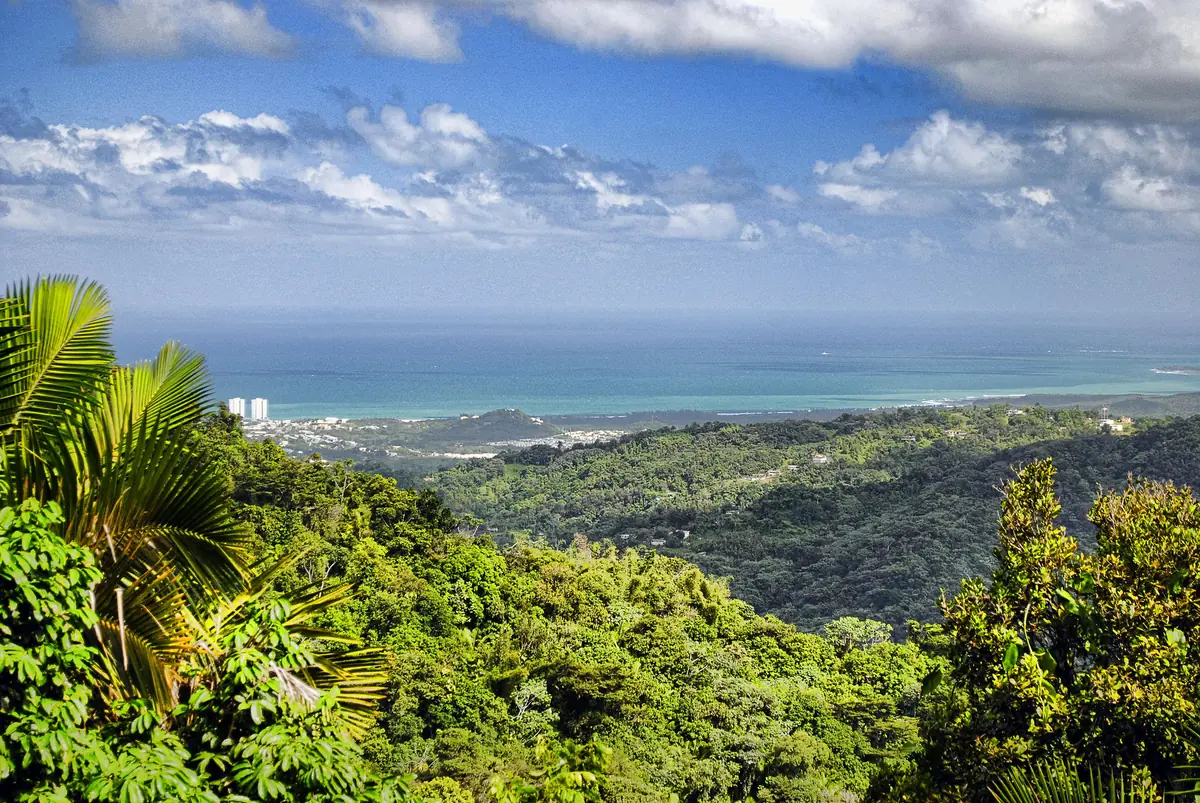
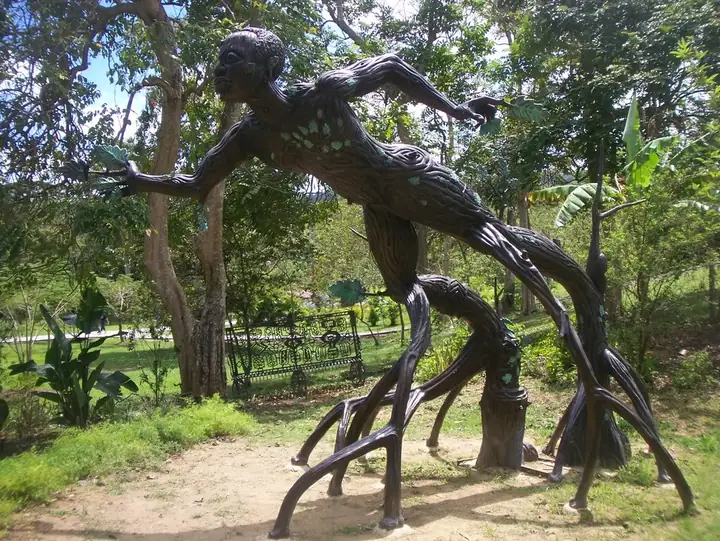
Half an hour south of San Juan, in the Turabo Valley, the city of Caguas turned the grounds of an old sugar plantation into a garden with a difference. The Jardín Botánico y Cultural William Miranda Marín is a botanical garden, but also an archaeological site, a history lesson and a nature reserve. Its theme is criollismo: the blending of Taíno, African and Spanish roots that shaped Puerto Rican culture, told through plants, ruins and artifacts. It is a relaxed half-day outing, easy to combine with lunch in Caguas or a drive into the mountains. Families with children will find plenty of space to walk, and the garden also runs school excursions and educational tours.
About the garden
The garden opened on March 30, 2007, and covers roughly 58 acres (about 236,000 square meters) in Barrio Cañabón, on the edge of Caguas. It is named for William Miranda Marín, a former mayor of Caguas, and is run by the municipality. The Río Cagüitas runs through the grounds.
The land was once part of the San José sugar mill, a plantation founded by the Spanish in the Turabo Valley in the 19th century that kept operating until the middle of the 20th century. The garden's director has described it as the only place in Puerto Rico where evidence of all three founding peoples, European, African and Taíno, has been found together. That idea shapes the layout, which is divided into zones devoted to each of the three cultures plus one for the criollo synthesis, with plants and animals tied to each.
What to see
History and archaeology
- The San José sugar mill ruins. Remains of the old Spanish hacienda and its mill, the heart of the plantation that once occupied this land.
- The slave barracks. A reconstructed barrack recalls the enslaved Africans whose labor ran the plantation.
- Taíno sites. The garden protects pre-Columbian archaeological sites, including petroglyphs, with finds ranging from indigenous times through the Spanish colonial period.
- The Casa Jíbara. A country house with a family vegetable plot shows how rural Puerto Rican families lived and farmed.
The plant collections
- The Heritage Forest (Bosque de la Herencia), with about 36 native and endemic tree species.
- The African Ancestral Grove, with a bronze monument to Osaín, a figure from African tradition.
- La Arboleda Florida, about 40 species of flowering trees.
- La Huerta Frutal, an orchard of some 50 kinds of fruit trees.
- El Palmar and El Bambular, collections of palms and bamboos.
- La Manigua, a wetland area, and a butterfly area.
- The Plaza Agrícola Urbana, with hydroponic growing houses that show modern small-scale agriculture.
- The Doña Tinita Sensory Garden, opened in 2023 with the Caguas Lions Club, designed for blind visitors. A fountain and fragrant plants such as gardenia, jasmine, mint and mussaenda invite visitors to listen, smell and touch.
Recovery after Hurricane María
Hurricane María damaged the garden in 2017. In April 2024, FEMA announced nearly $4 million for repairs and storm-proofing. By then, lamps, posts, water pipes, lighting, roof panels and visitor information systems had been replaced. Planned work included the administrative offices, concession stands, the butterfly house, the Casa Jíbara, the visitor center, recreational areas, bridges and the artificial lake. Some areas may still be under repair or closed when you visit, so ask at the entrance what is open.
Hours and admission
As of 2026, the garden's official website lists hours of Wednesday through Sunday, 10 a.m. to 4 p.m., with last entry at 3 p.m. It is closed Monday and Tuesday. The city's tourism site has said that Wednesday visits are by reservation, so check before going midweek. General admission, in effect since September 3, 2025, is $10 plus sales tax (IVU) for everyone aged 2 and up. Guided tours, school excursions and photo sessions can be arranged through the garden's office, which the city lists at 787-653-0470 and 787-653-0469.
Getting there
The garden is at kilometer 56.5 of PR-156 in Barrio Cañabón, Caguas. From San Juan, the drive takes about half an hour without traffic, via PR-52 south toward Caguas. You will need a car or taxi. Public transport to the garden is not practical for visitors.
Practical tips
- Arrive early. With last entry at 3 p.m., a late start leaves little time. Mornings are also cooler for walking.
- Wear comfortable shoes. The grounds are large, and seeing them means a fair amount of walking.
- Bring sun and bug protection, plus water, as you would for any outdoor garden visit in the tropics.
- Food. The garden has concessions and a restaurant, Terrazas del Jardín, but check whether it is open on the day of your visit.
- Events. The garden hosts concerts, family days and seasonal celebrations, including Christmas events. These can bring crowds, so check the events calendar first.
- Allow two to three hours to see the main areas without rushing.
Combine it with
Downtown Caguas has museums, cafés and restaurants; browse the Caguas listings for ideas, including the Ron Boricua distillery. Continue south to Guavate in Cayey for roast pork in the mountains. If you enjoy gardens, compare this one with the University of Puerto Rico Botanical Garden in San Juan.