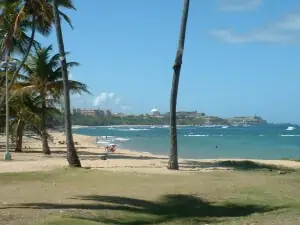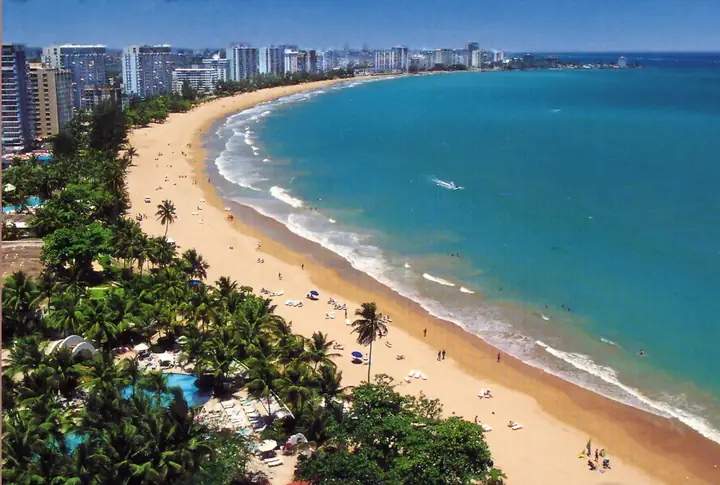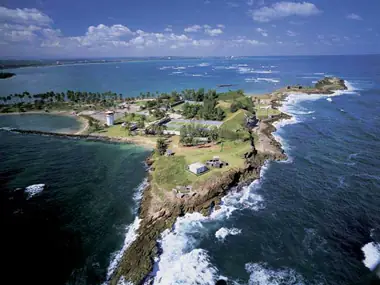
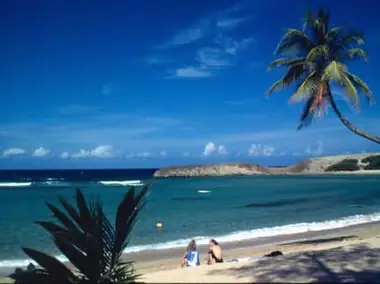
Playa Jobos is the social heart of Isabela's coast: a curve of sand on Road PR-466 where surfers paddle out at dawn, families gather at the beach bars by lunchtime and the music runs late on weekends. It is one of the best-known surf beaches in Puerto Rico and one of the busiest beaches in the northwest. It is also one of the most dangerous places on the island to swim. If you understand how this beach works, and where the one sheltered corner is, it makes an excellent day out.
Why go
Isabela, founded in 1819 and nicknamed the "Garden of the Northwest," has a coastline of cliffs, reefs and wave-exposed beaches, and Jobos is its most lively stretch. The surf draws riders from all over, and the town has hosted international competitions: Jobos was the site of the Rip Curl Pro, a world tour event, in February 2013. Even if you never touch a board, it is a good place to watch surfers, eat cheaply facing the water and walk out to the blowhole of Pozo de Jacinto.
Surfing at Jobos
There is surf at Jobos for much of the year. The biggest waves usually arrive in winter and early spring, when the beach also gets narrower; summer is generally calmer. Local surfers often reach the break by jumping off the rocks at the end of the beach, which is not something to copy unless you know the spot. Surf schools in the Isabela area give lessons, and boards can be rented within walking distance of the sand. Beginners should go with an instructor, who will know where the current runs that day, rather than paddling out alone.
Swimming: read this first
Jobos is not a swimming beach in the usual sense. A strong rip current runs off the main part of the beach, and there are no lifeguards. Warning signs about dangerous currents were installed in early 2021, and lives have been lost here. One long-running local travel guide says more people drown at Jobos than at any other beach in Puerto Rico.
The safer option is the protected cove at the east end, where a natural rock wall breaks the waves. The east corner of that cove is the calmest area and the usual choice for families with small children. Even there, stay close to shore. On calm days, mostly in summer, you can snorkel over the shallow rocks near the edge of the cove and see coral and small fish. In winter, or whenever the surf is up, stay out of the water entirely.
- Read the posted warning signs and watch where the water is pulling before you go in.
- If a current takes you, do not swim against it; swim parallel to shore until you are out of it.
- Wear sturdy water shoes. The rocks are sharp and slippery.
Pozo de Jacinto
A short walk east along the rocky shore from the beach brings you to Pozo de Jacinto, a hole in the limestone that the sea surges through. In big swells, water shoots up out of it like a geyser, and a smaller opening nearby groans and chugs as the waves move underneath. The waves crashing against the rock wall at this end of the beach also make it one of the most photographed spots in Isabela.
The place comes with a folk legend. A farmer named Jacinto was tending his cow with its rope tied to him when the animal took fright, bolted over the rocks and fell into the hole, dragging Jacinto down with it. Visitors are told to shout "¡Jacinto, dame la vaca!" ("Jacinto, give me the cow!") and wait for the sea to answer with a splash. It only works on rough days. The rock surface here is uneven and razor-sharp, and big waves can wash over it, so keep well back from the edge and keep a close hand on children.
Food, drink and facilities
Restaurants and bars line the road behind the beach and serve Puerto Rican food and drinks at local prices: empanadillas, cold coconuts, piña coladas and ice cream are standard. Some places rent beach chairs and umbrellas, and a beach shop sells snacks and rents gear.
There are no public facilities on the beach itself. Restrooms are inside the restaurants and are meant for customers. Shade is scarce, so bring an umbrella or arrive early to claim a shady spot. Trash bins overflow on busy days; take a bag and carry your rubbish out. Volunteers help keep this beach clean.
Getting there and parking
Jobos is on PR-466 in Isabela, on the northwest coast, about 1.5 to 2 hours' drive west of San Juan. A car is essential for exploring this part of the island. Parking is the main headache. Most of it is along the roadside, and it fills up quickly on weekends and holidays. Small paid lots, including some run by nearby homes and restaurants, charge a few dollars, usually in cash. A paid lot near people is often the better choice, because cars parked along this coast do get broken into. Leave nothing visible inside.
When to go
- Weekdays are quiet. Weekends and holidays are crowded and loud, which is part of the appeal for some visitors.
- Summer is the busiest season but also the calmest water and the best time to snorkel in the cove.
- Winter and early spring bring the biggest surf, which is the time to watch rather than swim.
- Bring water shoes, sunscreen, a hat, an umbrella, cash for parking and kiosks, and a trash bag.
Combine it with
Isabela has several other beaches a few minutes away, and most are less crowded than Jobos. Shacks Beach (Playa Bajura) and Montones are close by, and Middles Beach hosts an annual surf contest. Inland, the Guajataca State Forest has trails and the Cueva de los Vientos, and Lake Guajataca is a short drive away. Head west and you reach Aguadilla and Crash Boat Beach, one of the calmer swimming beaches in the northwest when the sea is flat. For places to stay and eat in town, see the Isabela directory.
Good to know
- Where: PR-466, Isabela, northwest Puerto Rico.
- No lifeguards and a strong rip current. Swim only in the sheltered east-end cove, and only on calm days.
- No public restrooms; restaurants have them for customers.
- Parking is limited; arrive early and lock valuables out of sight.
- Pozo de Jacinto is a short walk east along sharp rocks.