Las Croabas is a small fishing community on the northeastern tip of Puerto Rico, at the end of Road PR-987 in Fajardo. It is not a resort and has no big sights of its own. What it has is location. Almost everything that brings visitors to this corner of the island starts here or within a few minutes' drive: night kayak trips into the bioluminescent lagoon, boats to the offshore cays, the Cabezas de San Juan nature reserve and the calm water of Seven Seas beach. Add a waterfront seafood dinner and it is easy to spend a full day and evening in and around the village.
The village
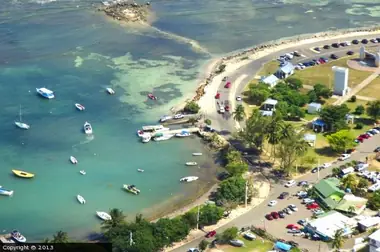
Las Croabas is a neighborhood of Cabezas, the coastal barrio that takes in Fajardo's northeastern headland. About a thousand people lived in the Croabas community at the 2010 census. Fishing has long been part of life in Fajardo, helped by its harbors and the many small islands offshore, and in Las Croabas small boats still tie up near the pier. Today the village doubles as one of the main launch points for tour boats in eastern Puerto Rico.
At the center is a small seaside park, the Las Croabas recreational park, edged by seafood restaurants that look out across the water toward the cays and, on clear days, Culebra. It is a pleasant place to sit with a drink, watch the fishing boats and wait for an evening tour. Bars and restaurants nearby serve seafood and Puerto Rican food; menus feature local fish, lobster and conch (carrucho). Ask what came in that day.
Kayaking the bioluminescent bay
Las Croabas is the departure point for most tours of Laguna Grande, Fajardo's bioluminescent lagoon. The kayak operators meet at a spot known as Kayak Village, just before the end of PR-987. Tours set off near the boat ramp, cross the small marina and enter a narrow channel roofed with mangroves, which leads to the lagoon. The channel is tight, so kayaks travel single file, and the current picks up in a couple of narrow spots. As you get close to the lagoon, each paddle stroke starts to sparkle.
- Most nights there are two departures, one around sundown and one at about 8 to 9 p.m. Allow at least two and a half hours and arrive about 30 minutes early.
- Most operators run Monday to Saturday, and only some go out on Sundays.
- The minimum age is usually 6.
- Swimming in the lagoon has been banned since 2007. Avoid getting sunscreen or insect repellent into the water.
- Moonless nights give the best glow. Book ahead, because tours fill up.
The kayaks are sit-on-top, so you will get wet. Wear quick-drying clothes and water shoes, since you wade in to board, and bring a towel. A restroom is available in Las Croabas to change. Operators listed in the directory include Kayaking Puerto Rico, which is based on PR-987 in Las Croabas. Some companies also run electric-boat trips for people who would rather not paddle.
Boats to the cays
A mile or so offshore lies the La Cordillera Reef Nature Reserve, a chain of cays, reefs and rocky islets managed by Puerto Rico's Department of Natural and Environmental Resources (DRNA). It includes Icacos, Ratones, Lobos and Diablo cays and the islands of Palominos and Palominitos. Its seagrass beds are important feeding grounds for sea turtles. Lobos and Palominos are privately owned, so do not land there without permission.
Las Croabas is a natural jumping-off point. Day trips to Icacos Island, the most popular cay, combine snorkeling with time on a white-sand beach; Kayaking Puerto Rico, for example, runs an Icacos snorkel-and-beach day aboard a motor vessel. Water taxis also shuttle visitors to the cays and back at an agreed time. Whoever you go with, take water, sun protection and your trash home, and do not stand on or touch coral.
Las Cabezas de San Juan
The entrance to the Las Cabezas de San Juan Nature Reserve is on PR-987 in Barrio Las Croabas. Run by Para la Naturaleza, the reserve covers dry forest, seagrass meadows, several kinds of beach and a mangrove boardwalk that leads down to Laguna Grande, the same lagoon you paddle at night. Visits are by guided tour and cannot be booked online; call (787) 722-5882 to reserve, as of 2026. Access to the area around the historic lighthouse is closed for restoration work, so ask what the tour currently includes. Bring closed shoes, water, a hat and sunscreen.
Getting there
Fajardo is about an hour's drive east of San Juan, longer in traffic. In Fajardo, follow PR-987 to its end; Las Croabas is the last stretch of the road. If you would rather not drive back to San Juan after a night tour, consider staying in Fajardo. Some tour companies offer or can arrange transport from San Juan. Ask your operator where to park, and do not leave valuables in sight.
Practical tips
- Timing. Spend the afternoon at the beach or on a cay, have an early dinner in the village and take the sundown kayak tour.
- Cash. Carry some for smaller bars and food stands.
- Bring water shoes, a towel, a dry change of clothes and a dry bag for your phone.
- Repellent. If you use it, apply it on land well before the tour and wash your hands, so it does not end up in the lagoon.
Combine it with
Seven Seas beach, a calm, sheltered public beach, is a few minutes away on PR-987, and the Cabezas reserve is next door. A morning in El Yunque, an afternoon on the sand and a night on the lagoon make a full east-coast day.
Good to know
- Where: end of PR-987, Barrio Cabezas, Fajardo; about an hour from San Juan.
- Main launch point for kayak tours of Laguna Grande; book ahead and go on a dark night.
- Boats and water taxis run to Icacos and the other Cordillera cays.
- Las Cabezas de San Juan tours are by phone reservation only; the lighthouse area is closed for restoration.
- Waterfront restaurants and a small seaside park make it a good place for dinner before a tour.